Buying prescription glasses online can be straightforward when you treat it as a checklist rather than an impulse purchase. This guide walks you through prescription details, pupillary distance, frame measurements, lens choices, virtual try-on, fit checks, returns, and the situations where an in-person fitting is the better option.
Overview
Online optical shopping gives you access to a broad selection of eyeglass frames, including acetate frames, metal eyeglass frames, designer eyeglasses, and unisex eyewear. The main challenge is that you must supply the information an optician would normally confirm in person. That usually includes your prescription, pupillary distance (PD), frame dimensions, lens type, and preferred features.
Before you begin, gather a copy of your current prescription and, if possible, the measurements from a pair of glasses that already fits well. Your prescription tells the retailer how to correct your vision; it does not necessarily tell you which frame will sit comfortably on your face. Frame width, bridge fit, temple length, lens height, and the position of your eyes behind the lenses all matter.
If you are comparing several retailers, compare complete configurations rather than frame prices alone. Lens material, lens thickness, anti-reflective coating, tint options, shipping, protection plans, and the return or exchange process may change the final value. This related guide explains how to compare eyeglass prices online without missing lens upgrade costs.
Checklist by scenario
For a straightforward single-vision order
- Confirm the prescription. Check the sphere, cylinder, axis, and any additional values exactly as written. If the prescription includes a separate near or reading value, make sure you select the lens type that matches your intended use. For background, see single vision vs. reading glasses.
- Find your PD. Pupillary distance is the measurement between your pupils, and some prescriptions list one total PD while others list separate right and left measurements. Use the format requested by the retailer. If your PD is not listed, ask the prescribing practice or follow the retailer’s measurement instructions. A phone-based tool can provide an estimate, but careful positioning and good lighting are important.
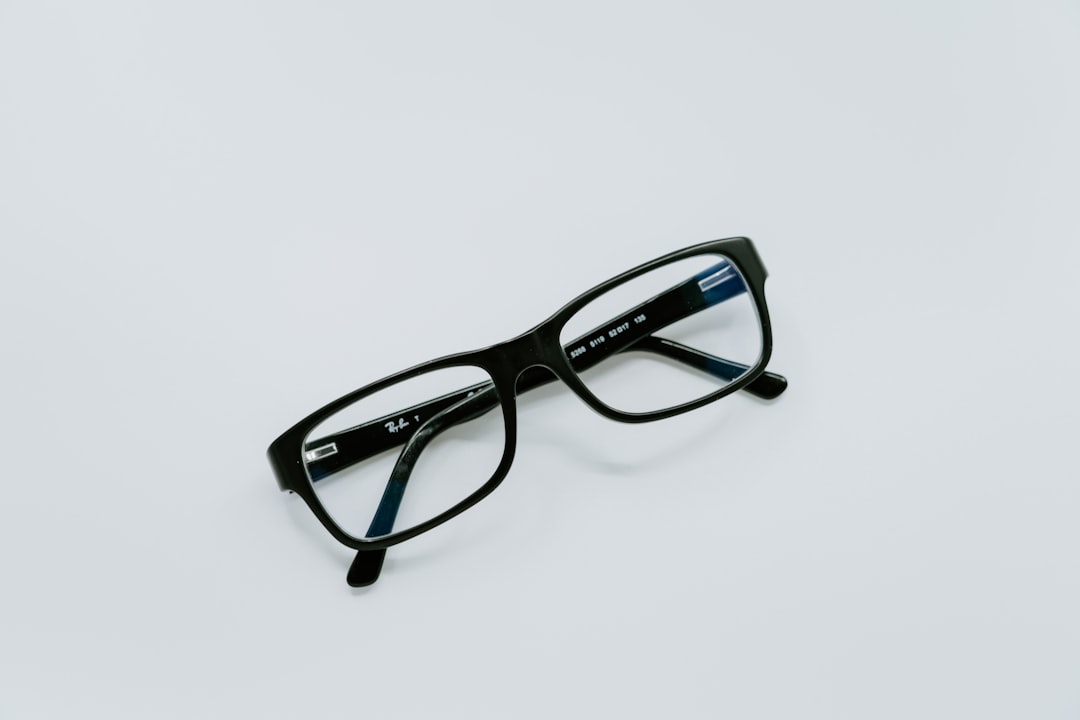
- Choose a frame size based on measurements. Look inside the temple of an existing pair for a sequence such as lens width, bridge width, and temple length. These numbers are a useful starting point, not a guarantee. Compare them with the new frame’s measurements and consider whether your current pair feels narrow, loose, or comfortable.
- Select lenses for the prescription and use case. Higher prescriptions may benefit from thinner materials, often described as high index lenses. Ask how the material affects thickness, weight, durability, and appearance rather than choosing solely by the highest available index.
- Review the final configuration. Confirm right and left eye values, lens type, coating selections, frame color, and quantity before ordering. Save a copy of the order details.
For glasses used at a computer or desk
Start by deciding whether you need everyday distance correction, a dedicated near or computer prescription, or a multifocal design. Screen distance, working posture, and the tasks you perform can affect which option is appropriate. Blue light glasses are not a substitute for a prescription when correction is needed, and they are only one possible lens feature. Read more in the computer glasses guide before choosing a work pair.
For long periods at a desk, pay particular attention to frame weight, bridge comfort, temple pressure, and lens reflections. An anti-reflective coating may be worth considering if reflected light is distracting, but compare the coating description and care requirements offered by the retailer.
For progressive or multifocal lenses
Progressive lenses require more than a basic prescription and approximate frame selection. The frame must provide suitable lens height, and the measurements used to position the progressive design need to be accurate. Some retailers request additional fitting measurements or restrict which frames can be used with certain prescriptions.
If this is your first progressive pair, your prescription has changed substantially, or you have had difficulty adapting before, an in-person fitting may be worthwhile. An optician can assess frame position and make adjustments that are difficult to handle remotely. If you order online, choose a retailer with clear measurement instructions and a practical remake or return process, then verify every fitting requirement before payment.
For prescription sunglasses
Choose the prescription first, then decide whether you need a solid tint, gradient tint, or polarized lenses. Polarization can be useful for reducing certain types of glare, but it is not the same as UV protection. Confirm the stated UV protection separately. The prescription sunglasses guide covers lens colors, polarization, and prescription options, while this UV400 guide explains what to check for UV protection.
What to double-check
- Prescription details: Do not transpose the right and left eye values. Check whether the retailer requires a recent prescription or additional verification, and contact a qualified eye-care professional if you are unsure whether your prescription is suitable for a new order.
- PD format: Make sure a total PD has not been entered where separate monocular measurements are requested, or vice versa. If a measurement seems unusual or inconsistent with your existing glasses, pause before ordering.
- Frame dimensions: A larger frame can affect lens thickness and weight, especially with stronger prescriptions. A narrow frame may reduce usable viewing area or feel restrictive. Compare measurements, then use photos and virtual try-on as supporting tools rather than final proof.
- Bridge and temple fit: The bridge should sit securely without constant slipping or pressure. Temples should rest comfortably without pinching. Nose pads on metal frames can often be adjusted, while acetate frames may need a different bridge shape for a stable fit.
- Lens upgrades: Review what is included in the base lens and what costs extra. Check material, thickness, anti-reflective coating, scratch-resistance claims, tint, polarization, and any special design. Do not assume that the most expensive option is automatically the best match for your needs.
- Virtual try-on: Use it to assess general proportions, color, and style. It may not accurately show bridge grip, frame weight, lens thickness, or how the frame sits when you move.
- Returns and adjustments: Read the retailer’s current terms before placing the order. Confirm the allowed time frame, exclusions for prescription lenses or personalized products, adjustment support, and whether a remake is available if the measurements are entered incorrectly.
For a final pre-purchase review, use the online glasses buying checklist. It is especially useful when you are ordering multiple pairs or comparing different lens packages.
Common mistakes
Choosing by appearance alone. A frame can look ideal in a photograph and still slide, pinch, or sit too close to your cheeks. Treat style as one part of the decision and measurements as another.
Copying measurements without checking the fit. The numbers inside your current frame describe that frame, not your face. If it has always slipped or pinched, use it as a reference but do not reproduce its size automatically.
Guessing the PD. A rough estimate may be unsuitable for some prescriptions or lens designs. Follow the measurement method carefully, request help when available, and avoid ordering until the value is credible.
Ignoring lens thickness and weight. Frame size, prescription strength, and lens material interact. Ask how the selected combination is expected to affect thickness and comfort before finalizing the order.
Assuming every online order is equally suitable. Single-vision glasses are often simpler to order than progressive lenses or complex prescriptions. A first pair of progressives, a major prescription change, or persistent fitting problems may justify an optician-led purchase.
Forgetting care and storage. Even well-made premium eyewear can be damaged by dry wiping, heat, or loose storage. Follow the retailer’s care instructions and review how to clean glasses properly without scratching the lenses.
When to revisit
Return to this checklist whenever one of the inputs changes: your prescription, PD, preferred frame size, daily visual tasks, or lens requirements. Revisit it before replacing worn glasses, ordering prescription sunglasses for a new activity, switching to progressive lenses, or buying a second pair in a different shape.
It is also sensible to review your choices when a current pair develops recurring slipping, pressure, visual distortion, damaged coatings, or lens scratches. These signs do not identify the cause on their own, so seek professional advice when vision or comfort has changed unexpectedly. For general replacement planning, see when to replace your glasses.
Action plan: save your prescription, record your PD and the measurements of a comfortable frame, define where you will use the new pair, compare complete lens configurations, and read the current return terms. Then order only after checking the prescription, PD, frame dimensions, lens options, and final total one last time.